

Heart Attack Warning Signs in Purnea | DHCRC

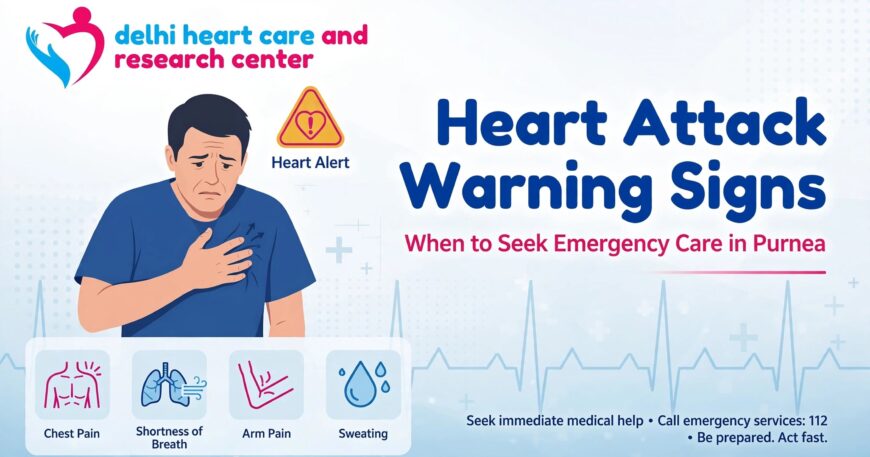
Heart Attack Warning Signs: When to Seek Emergency Care in Purnea
A heart attack can happen suddenly, but the warning signs may begin slowly and can differ from person to person. Recognising these symptoms and seeking medical attention quickly can help reduce the risk of serious heart damage.
Delhi Heart Care and Research Center, Purnea provides cardiology, critical-care, diabetes, and lifestyle-disease management services, including ECG, 2D echocardiography, advanced diagnostic evaluation, and medical management of heart conditions.
What is a heart attack?
A heart attack occurs when blood flow to part of the heart muscle becomes blocked or severely reduced. Without timely treatment, the affected heart muscle may become permanently damaged. Heart disease risk can increase with conditions such as high blood pressure, diabetes, high cholesterol, smoking, obesity, physical inactivity, and a family history of heart disease. Some people may also have a heart attack without having obvious symptoms beforehand.
Common warning signs of a heart attack
Do not ignore any new, unexplained, or severe heart-related symptoms. Common warning signs include:
- Pressure, tightness, heaviness, squeezing, or discomfort in the centre of the chest.
- Pain or discomfort spreading to the shoulder, arm, back, neck, jaw, or upper abdomen.
- Shortness of breath, with or without chest discomfort.
- Cold sweating or unusual clamminess.
- Nausea, vomiting, or indigestion-like discomfort.
- Dizziness, weakness, faintness, or a feeling that something is seriously wrong.
- Unusual tiredness, particularly when accompanied by breathlessness or chest discomfort.
Chest discomfort may last for several minutes, disappear, and then return. It may not always feel like sharp pain. The American Heart Association advises seeking emergency help when heart attack warning signs occur instead of waiting to see whether the symptoms improve.
Symptoms may be different in women and people with diabetes
Although chest discomfort is a common symptom, not everyone experiences a heart attack in the same way. Women may be more likely to notice symptoms such as unusual fatigue, shortness of breath, nausea, back pain, or jaw discomfort.
People with diabetes and older adults may also experience mild or less typical symptoms. In some cases, they may have breathlessness, weakness, dizziness, or unexplained tiredness without severe chest pain. The World Health Organization recognises chest discomfort, shortness of breath, nausea, and other symptoms as possible signs of a heart attack.
This is why unexplained symptoms should not be dismissed as acidity, gas, stress, or exhaustion—especially when a person has diabetes, high blood pressure, or a history of heart disease.
What should you do during a possible heart attack?
If you or someone nearby may be experiencing a heart attack:
- Seek emergency medical help immediately. Do not wait for the symptoms to disappear.
- Keep the person calm and seated while help is being arranged.
- Avoid unnecessary movement or exertion.
- Do not drive yourself if emergency transport is available.
- Follow instructions from emergency medical professionals.
- Inform the medical team about existing conditions, allergies, medicines, and previous heart problems.
Emergency medical services can begin assessment and treatment before the patient reaches the hospital. Calling for emergency help is generally safer than delaying care or travelling without medical support.
Do not self-medicate or take someone else’s heart medicine. Medicines such as aspirin may not be suitable for everyone, particularly people with allergies, bleeding disorders, or certain medical conditions. Take medication only according to emergency medical guidance or a doctor’s previous instructions.
When should you consult a cardiologist?
You should arrange a cardiology consultation if you experience:
- Repeated chest discomfort during walking, climbing stairs, or physical activity.
- Breathlessness that is new, persistent, or worsening.
- Palpitations or an irregular heartbeat.
- Swelling of the feet or ankles.
- Frequent dizziness or fainting.
- High blood pressure, diabetes, or high cholesterol.
- A previous heart attack or other heart condition.
- A strong family history of early heart disease.
A cardiologist may recommend tests based on your symptoms and medical history. These may include an ECG, blood tests, echocardiography, blood-pressure assessment, or other diagnostic investigations.
Can heart attacks be prevented?
Not every heart attack can be prevented, but many risk factors can be reduced through regular medical care and healthy daily habits. Helpful steps include:
- Stop smoking and avoid tobacco products.
- Monitor and control blood pressure, blood sugar, and cholesterol.
- Take prescribed medicines regularly.
- Choose a balanced diet with more vegetables, fruits, whole grains, and pulses.
- Limit excess salt, unhealthy fats, and highly processed foods.
- Maintain regular physical activity as advised by your doctor.
- Maintain a healthy weight.
- Manage stress and get adequate sleep.
- Attend regular heart-health check-ups if you have risk factors.
The WHO identifies tobacco use, unhealthy diet, physical inactivity, harmful alcohol use, high blood pressure, high blood sugar, and high cholesterol among important cardiovascular-disease risk factors.
Heart symptoms require prompt attention
Chest discomfort, breathlessness, sweating, nausea, or sudden weakness may have causes other than a heart attack, but it is not safe to diagnose the cause at home. Prompt evaluation is especially important for people with diabetes, hypertension, high cholesterol, smoking history, or previous heart disease.
For heart-related symptoms or concerns about cardiovascular health, consult a qualified cardiologist at Delhi Heart Care and Research Center, Purnea. In a suspected emergency, seek immediate emergency medical care rather than waiting for a routine appointment.
Medical disclaimer: This article is intended for general health education and does not replace emergency medical evaluation, diagnosis, or treatment by a qualified healthcare professional.